
Sgt. Bryant Skillfully Steers Mental Health Team Serving the Jail’s Most Vulnerable

Working with some of the Multnomah County jail system’s most vulnerable population, those experiencing acute symptoms of mental health conditions including bipolar disorder, schizophrenia, obsessive compulsive disorder or psychosis, is both professionally challenging and ethically demanding.
Multnomah County Sheriff’s Office Corrections Sergeant Jordan Bryant navigates these challenges with the agility and discipline one would expect from a former competitive athlete and coach.
“We want to make sure individuals with the highest mental health needs are not left behind,” he said. “Our role is to help them navigate the system and encourage forward movement toward stability and positive change.”
A decorated high school wrestler, Bryant was accepted to two U.S. service academies but chose instead to study philosophy and humanities at a university in British Columbia for its renowned wrestling program.
While enrolled at the university, which was home to one of Canada’s Olympic training centers, Bryant joined the Burnaby Mountain Wrestling Club, which regularly hosted international teams, giving Bryant experience competing with some of the world’s best athletes.
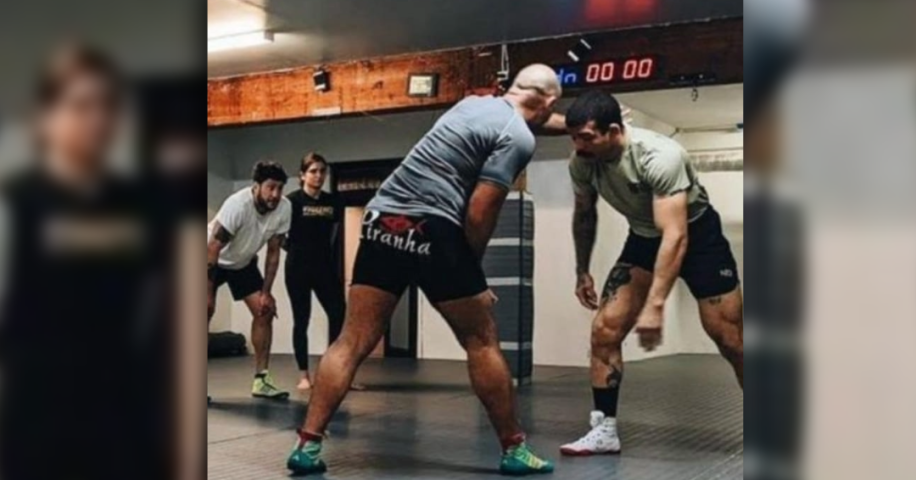
In 2008, Bryant returned to the Beaverton School District, this time as a wrestling coach rather than a student. It was there that he met a retired Multnomah County Sheriff’s Office command member, whose son he coached. She persuaded him to join MCSO as a corrections deputy soon after.
Bryant was promoted to sergeant on May 4, 2015, and spent much of his time supervising graveyard and day shift teams at the Multnomah County Detention Center (MCDC).
Recognizing his own ability to work effectively with adults in custody experiencing acute mental illness, Sgt. Bryant met with corrections leaders to request to lead the Mental Health Unit in 2023.
Bryant now supervises two Mental Health Deputies, Rob Bovey and Suad Mehmedovic, who split their time between the Multnomah County Justice Center and Inverness Jail (IJ), ensuring greater access to the unit’s specialized services.
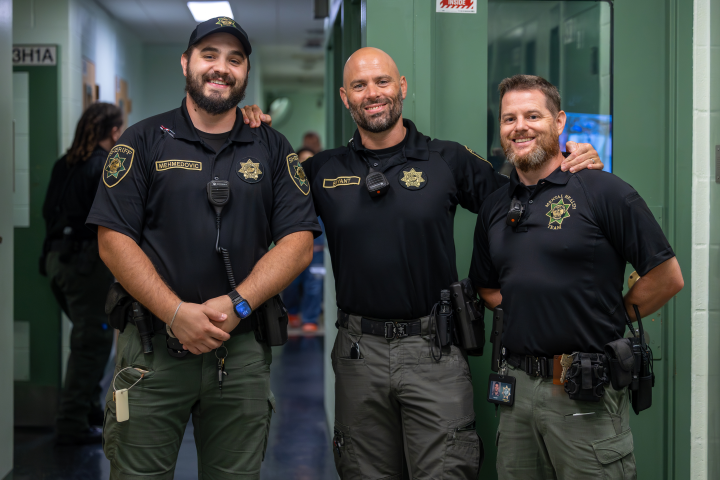
“Individuals with mental health challenges often require intensive, individualized care that goes far beyond standard corrections protocols,” Bryant said.
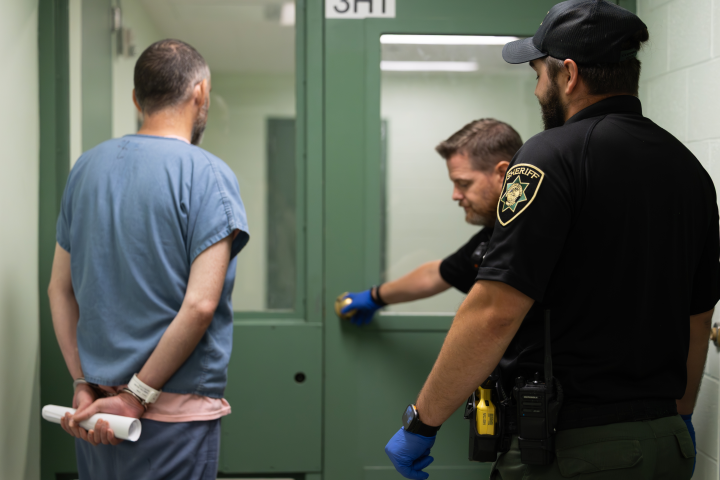
His team helps facilitate the access attorneys, forensic evaluators and court staff have to adults in custody.
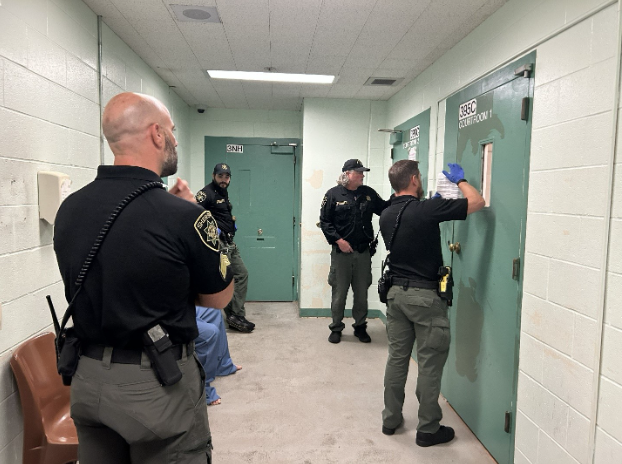
“Sometimes the adults in custody we serve decline these visits, which makes getting them the help they need and moving the justice process forward incredibly difficult,” Sgt. Bryant admits.
For this reason, the unit acts as a liaison, organizing visits, accompanying evaluators into housing modules and preparing detailed behavioral documentation when needed.
“Deputies Bovey and Mehmedovic are so personable, and highly skilled at keeping adults in custody experiencing a mental health crisis engaged in their legal process, even those who may eventually be deemed unfit to aid and assist in court proceedings.”
Without the team’s intervention, routine legal steps would be significantly more challenging for jail staff. Navigating suicide watch protocols — including monitoring individuals during attorney visits when staffing is limited — is another area where the team provides support.
Bryant said although his team has grown, misconceptions surrounding corrections work persist.
“We have zero desire to have the most vulnerable adults in our custody suffer alone through a mental health crisis,” he said. “Jail was never intended to be their final stop.”
His empathy for those his team serves is born from personal experience.
A long-time Corrections Emergency Response Team (CERT) member, Bryant is intimately familiar with the mental health challenges repeated, intense occupational stress can cause.
“The CERT Team was activated regularly during the 2020 demonstrations in downtown Portland,” he recalls. “We helped ensure that staff could safely access the jail at all hours of the night, even in extremely high-risk situations.”
Bryant, who joined CERT in 2010, still serves as a team leader. He says his experience on CERT has made him even more passionate about the importance of mental, spiritual and physical health.
To maintain his own well‑being, Bryant prioritizes physical fitness, sleep and nutrition.
“Habits I developed competing in wrestling have contributed long term to my mental wellness,” he said.
His background in wrestling, jiu‑jitsu and mixed martial arts — including a professional MMA fight in 2011 — has also been an asset to the agency’s de‑escalation training.
Bryant currently serves on the agency’s Defensive Tactics Committee, helping train new team members in calm decision‑making when safety interventions are needed.
“My goal is to teach them not to be reactive, and instead model steady, controlled behavior,” Bryant said.
Another valuable skill he hopes to instill in newer team members is the ability to find purpose outside of their job.
“Your entire sense of identity and self-worth cannot be tied to your job title or performance,” he emphasized.
Bryant, who highly recommends the book “Emotional Survival for Law Enforcement” to anyone working in public safety, insists that maintaining a healthy work-life balance is crucial to career longevity and overall health.
“I don’t want to spend ten-hour shifts making impactful decisions and then go home and give my family the worst version of myself.”
Ultimately, Sgt. Bryant has found that the most effective way to help adults in custody experiencing a mental health illness is to model the stability and calm he hopes to foster within Multnomah County’s jail facilities.