Leading the Front Lines of Gun Violence Prevention in Oregon

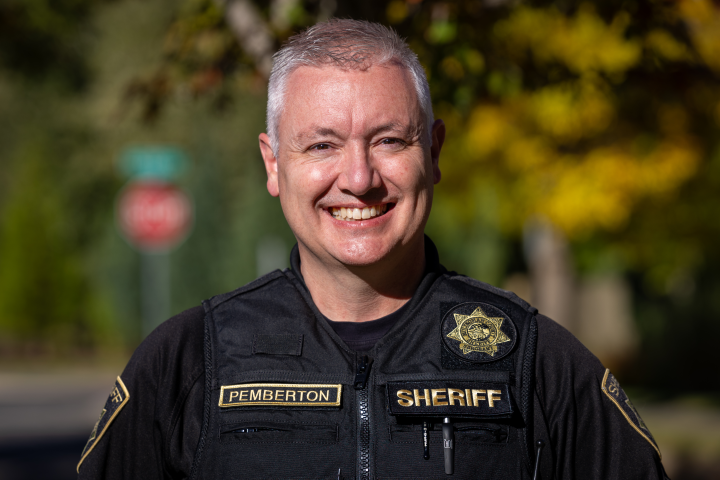
Multnomah County Sheriff’s Office Sergeant John Pemberton is at the helm of Oregon’s only dedicated Gun Dispossession Unit (GDU), a team responsible for serving and enforcing firearm prohibition orders, many tied to Extreme Risk Protection Orders and domestic violence cases.
Pemberton oversees two deputies in the GDU, which has become a statewide and national model for how law enforcement can help ensure that individuals subject to firearm prohibition orders safely relinquish their weapons.
While some Oregon counties manage aspects of gun dispossession through their judicial systems, no other jurisdiction in the state has a unit solely dedicated to this work.
“To succeed in our unit, you really need to be able to deescalate tense situations,” Pemberton said. “Often, subjects can become very defensive. We're there to dispossess firearms, and there is an inherent danger in that work."
Pemberton’s commitment to this specialized and sensitive field is the culmination of a 24year law enforcement career.
He earned a Bachelor of Science in Criminal Justice from Portland State University, originally planning to follow his sister into probation work. But his interest shifted toward policing during his time at PSU.
In 1999, Pemberton began his career as a Fairview Police Reserve Officer and accepted a fulltime position with the department in 2002. He continued serving the Fairview community until 2017, when the city contracted its police services to the Multnomah County Sheriff’s Office and he joined MCSO.
Over the decades, Pemberton has contributed his investigative and enforcement experience to the East Metro Gang Team, the Vehicular Crimes Team, and now the GDU. He also serves as a sergeant in the Detective Unit when needed.
Under Pemberton’s leadership, the GDU has expanded both partnerships and productivity. In 2024, the unit dispossessed 316 firearms. In 2025, that number climbed to 380, with the team on track to surpass those figures again in 2026.
He attributes the increasing caseload not only to the unit’s efficiency but also to strengthened relationships with domestic violence advocacy groups, law enforcement mental health professionals, and local criminal intelligence units.
“I feel like we're helping to potentially save lives and keep people safe,” Pemberton said. “To me that’s important work.”
As firearm prohibition laws vary widely across the country, agencies beyond Oregon have turned to MCSO’s GDU for insight.
Most recently, elected leaders and law enforcement officials in Maine consulted the unit as they began developing their own firearm dispossession program guidance.
Pemberton was also invited to speak about the model at the International Association of Chiefs of Police (IACP) Conference in Denver.
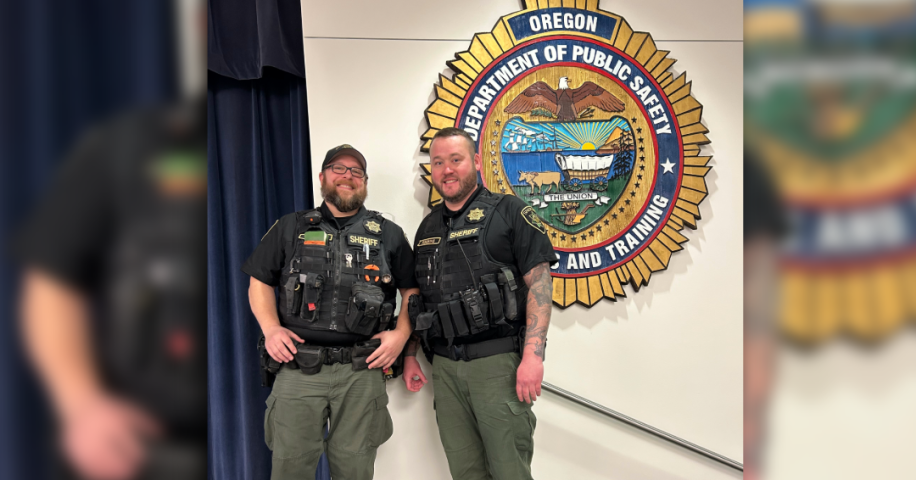
Meanwhile, GDU Deputies Robbins and Sullivan have also participated in gun violence prevention panels, including at a DPSST forum where they shared their work involving Extreme Risk Protection Orders (ERPOs) before various public safety professionals, including partners from the FBI and the Oregon Department of Justice.
“There is a misconception that we are against gun ownership. That couldn't be farther from the truth,” he explained. “We are solely focused on protection orders where there is a firearm component.”
Subjects under firearm prohibition orders are given several legal options for relinquishing their weapons within a specified time period.
“They can give them to us, and our logistics team will process them,” Pemberton said. “They can transfer them to a third party. They can also pawn them or sell them at a gun shop. They just can't have possession of them until their court order expires.”
Most orders last only one to two years.
“When they expire,” Pemberton noted, “the subjects may recover their weapons.”
Despite the complexity and risks inherent in disarming individuals who may be in crisis, Pemberton remains grounded in the purpose behind the work.
“We're not against people having guns. We want to keep people safe. That's the goal.”
Outside of the job, Pemberton enjoys spending time with his four children and attending Portland Winterhawks hockey games — a reminder, he says, of the communities he serves and the lives the GDU’s work aims to protect.